Day 1 – Commemoration Sites of Darwin
Overnight: Darwin
Darwin Cenotaph War Memorial
Survivor’s Lookout to Government House
USS Peary Memorial to Doctor’s Gully
Day 2 – Visitor Orientation and Interpretation
Overnight: Darwin
Top End Visitor Information Centre
Tour Tub Darwin City Explorer
Royal Flying Doctor Service Darwin Tourist Facility
Day 3 – Bombing History & Naval Defence
Overnight: Darwin
Bombing of Darwin WWII Heritage Tours
Big Bus Darwin
WWII Navy Oil Storage Tunnels 5 & 6 and WWII Oil Storage Tunnels Tour.
Day 4 – Harbour Logistics & East Point Batteries
Overnight: Darwin
Frances Bay Explosives Complex
WWII Navy Victualling Yard Building
East Point Reserve
Pee Wee Camp
Day 5 – Observation & Coastal Defence Posts
Overnight: Darwin
WWII Observation Post, Brinkin
WWII Observation Post, Brinkin Terrace
WWII Observation Post, Sandy Creek
Casuarina Coastal Reserve
Day 6 – RAAF & Darwin Airfield Infrastructure
Overnight: Darwin
WWII RAAF Operations Room, Berrimah
WWII RAAF Explosive Storage Area
WWII Winnellie Camp
Charles Darwin National Park
Day 7 – Wagait & Mandorah Loop
Overnight: Darwin or Mandorah
WWII Hughes Airfield
WWII Gun Emplacement Wagait Beach
Wreck of the B24J Liberator Bomber Milady
Mandorah & Wagait Beach
Day 8 – Southern Darwin Defence Belt
Overnight: Adelaide River
WWII Camp 16 Mile
WWII Quarantine Anti Aircraft Battery Site
WWII Noonamah Railway Siding and Stores Depot
WWII Noonamah Cricket Pitch and Strauss Airfield
Day 9 – Strategic Rail & Commemoration Sites
Overnight: Adelaide River
WWII Strauss Airfield Precinct
WWII Pell Airstrip Camp A 4RSU Workshop
Adelaide River War Cemetery
Memorial to Railway Workers
Day 10 – Batchelor to Coomalie Operations
Overnight: Katherine
Batchelor Museum
Batchelor Airfield and anti-aircraft battery
WWII K5 Anti Aircraft Gun Battery Site, Coomalie Creek
WWII No1 RAAF Medical Receiving Station
Day 11 – Marrakai to Pine Creek
Overnight: Katherine
Marrakai Military Museum
Snake Creek Armament Depot
Brocks Creek Military Detention Barracks
Pine Creek Water Gardens
Day 12 – Larrimah Supply Trail
Overnight: Larrimah
Pine Creek Railway Precinct
Burrundie Explosive Magazines
Larrimah Museum
Day 13 – Gorrie & Tennant Rail Sites
Overnight: Tennant Creek
Gorrie Airfield
North Australia Railway Memorial
Tennant Creek Hospital Outpatients Department
Day 14 – Attack Creek & Telegraph Network
Overnight: Tennant Creek
Attack Creek Historical Reserve
Warloch Ponds Rail & Road Bridges
Day 15 – Southbound Transit
Overnight: Alice Springs (Drive day with optional regional stopovers)
- Tennant Creek Telegraph Station
Day 16 – Central Alice WWII Trail
Overnight: Alice Springs
Anzac Hill Memorial
Spencer Hill WWII Sites
Totem Theatre Complex
Adelaide House
Day 17 – Telegraph Stations & Commemorative Wrap-Up
Overnight: Alice Springs or tour end
Seven Mile Aerodrome
Barrow Creek Telegraph Station Historical Reserve
Bombing of Darwin Day Commemorative Service 2024 (Optional - Seasonal, February only)
Start in ダーウィン
ExploreDay 1
-
![Darwin Cenotaph War Memorial]()
The Darwin Cenotaph commemorates Australian men and women who have served in conflicts in which Australia has been involved.
-
![Survivor’s Lookout]()
Survivor's Lookout, located near the Esplanade, provides sweeping views over the sparkling blue Darwin Harbour and commemorates those brave Darwin citizens who survived the Bombing of Darwin in 1942.
-
![USS Peary Memorial]()
A 4-inch gun from the USS Peary now stands as a memorial, pointing toward the site where the ship lies wrecked beneath Darwin Harbour.
Stay:
Darwin accommodation



Day 2
-
![Top End Visitor Information Centre]()
The Top End Visitor Information Centre is situated in Darwin CBD and offers personalised visitor services and a comprehensive selection of brochures, booklets, maps and timetables.
-
![Tour Tub Darwin City Explorer]()
Darwin City Explorer, known locally as the Tour Tub, has been showcasing Darwin’s top sights and attractions since 1985.
-
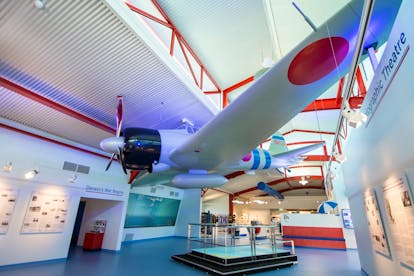
![Royal Flying Doctor Service Darwin Tourist Facility]()
See, experience and learn through the wonder of technology as this facility brings history to life.
Stay:
Darwin accommodation


Day 3
-
![WWII Bombing of Darwin Tour by Land and Sea]()
WWII Bombing of Darwin tour by land and sea is a half-day experience (0800 to 1230) that takes in significant war history sites.
-
![Big Bus Darwin]()
Discover Australia's Top End on the Hop-on, Hop-off Darwin Big Bus Tour!
-
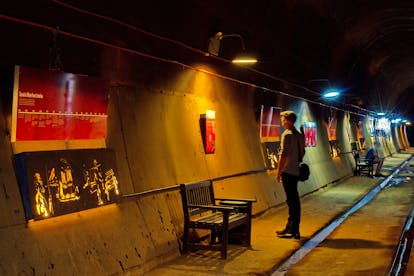
![WWII Navy Oil Storage Tunnels 5 & 6, Darwin]()
During World War II vulnerability of standard fuel storage tanks to aerial bombing stimulated the innovative approach of underground fuel storage in concrete and steel lined tunnels.
-
![WWII Oil Storage Tunnels Tour]()
The World War II Oil Storage Tunnels were built during the Second World War by the Civil Construction Corps.
Stay:
Darwin accommodation


Day 4
-
![Frances Bay Explosives Complex]()
The complex consists of a number of concrete stores buildings of various sizes built in areas excavated from the cliffs along Tiger Brennan Drive.
-
![WWII Navy Victualling Yard Building]()
The WWII Navy Victualling Yards were constructed as part of the build-up for defence purposes in the late 1930's.
-
![East Point Reserve]()
East Point Reserve is Darwin's largest park area.
-
![Pee Wee Camp, East Point]()
The Sidney Williams Hut and Annexe at Pee Wee Camp, along with several concrete floor slabs, are all that remains of a large camp developed on the site during WWII.
Stay:
Darwin accommodation


Day 5
-
![WWII Observation Post, Sandy Creek]()
The Observation Post, Sandy Creek at the Casuarina Coastal Reserve was built between 1939-1941 during the build-up of defence installations in Darwin.
-
![WWII Observation Posts Dripstone Cliffs]()
The three concrete observation posts built into the top of Dripstone Cliffs in Casuarina Coastal Reserve Darwin, were part of a number of observation posts constructed around Darwin from 1939.
-
![Casuarina Coastal Reserve]()
Casuarina Coastal Reserve protects a large coastal area in Darwin's northern suburbs.
Stay:
Darwin accommodation


Day 6
-
![WWII RAAF Operations Room, Berrimah]()
The former RAAF Operations Room resulted from a direction of the Air Board for co-ordinated control of aerial defences, including Radio Direction Finding and anti-aircraft defences in the North Western Area of Operations in the north of Australia during World War II.
-
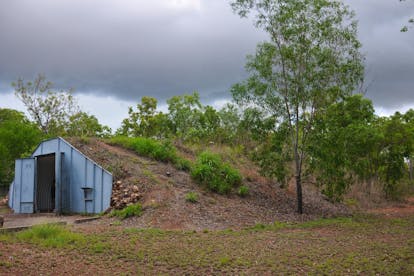
![WWII RAAF Explosive Storage Area, Darwin]()
Charles Darwin National Park contains rich natural and cultural resources including protected bird species, middens and mounds, and historic structures associated with military activities.
-
![Charles Darwin National Park]()
Situated on Darwin's Frances Bay, Charles Darwin National Park protects one of Australia's most significant wetlands, important woodlands and local indigenous and WWII histories.
Stay:
Darwin accommodation


Day 7
-
![WWII Hughes Airfield]()
The site consists of sealed runway approximately 1.9km long with two main taxi ways at the northern end of approximately 600m across.
-
![WWII Gun Emplacement Wagait Beach]()
The site comprises remnants of two WWII Gun Emplacements and associated infrastructure including a small control building immediately adjacent to the gun emplacements and a small concrete structure some distance away.
-
![Wreck of B24J Liberator Bomber Milady]()
The B-24J Liberator Bomber was developed and produced in response to a much needed requirement for the war effort in Europe and the Pacific.
-
![Mandorah & Wagait Beach]()
Mandorah is on the western side of Darwin Harbour on the Cox Peninsula, a pleasant 15-minute Sealink ferry ride from Cullen Bay.
Stay:
Wagait Beach accommodationView 0 options


Day 8
-
![WWII Camp 16 Mile]()
The WWII Camp 16 Mile was a World War II military base located along the Stuart Highway.
-
![WWII Quarantine Anti Aircraft Battery Site]()
Established in 1941, the Quarantine Anti-Aircraft Battery Site is the only complete gun-site of its type within the Darwin area.
-
![WWII Noonamah Railway Siding and Stores Depot]()
The Noonamah railway siding and its associated sites were developed as an adjunct to the Aerodrome Development Program in early 1942, when a series of airstrips and airfields, including Sattler, Strauss, Hughes and Livingstone was established south of Darwin.
-
![WWII Noonamah Cricket Pitch and Oval, near Strauss Airfield]()
The Strauss cricket pitch was an important part of the activities of service personnel in the area during the war years and in recent years is used for annual matches between military and local teams on Anzac Day.
Stay:
Darwin Region accommodation


Day 9
-
![WWII Strauss Airfield Precinct]()
Strauss Airstrip, dating from 1942-45, is one of the last surviving and most intact World War Two pursuit fighter installations in northern Australia.
-
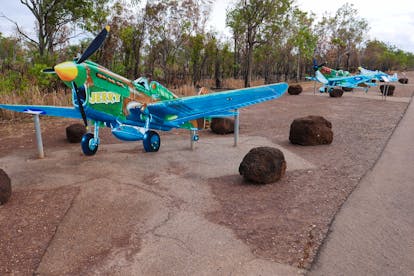
![WWII Pell Airstrip Camp A 4RSU Workshop, Adelaide River]()
Pell Airfield was named in honour of Major Floyd J Pell, who was killed during the first Japanese attack on Darwin on 19 February 1942.
-
![Memorial to Railway Workers Adelaide River]()
The memorial honours railway workers who worked under strict military conditions, carrying out work while under threat of enemy fire during the Second World War.
-
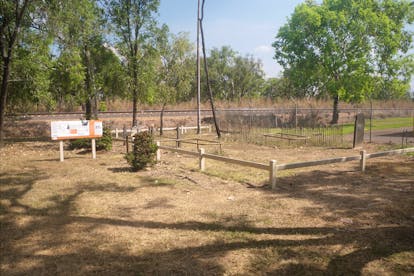
![Adelaide River Pioneer Cemetery]()
Located 150 metres south of the Adelaide River Railway Bridge the small cemetery contains a number of graves marked by headstones, wooden markers and star pickets.
Stay:
Adelaide River accommodation


Day 10
-
![Batchelor Museum]()
Batchelor has a unique history which the Museum keeps alive, showcasing aspects of aboriginal culture and the Federal Government’s agricultural plans of 1911.
-
![WWII No1 RAAF Medical Receiving Station]()
This site is comprised of the remnants of the No1 RAAF Medical Receiving Station.
-
![Batchelor Airfield and Anti-Aircraft Battery]()
The Batchelor Airfield played a key role during World War II, used by both Australian and allied forces.
Stay:
Litchfield National Park accommodation


Day 11
-
![Marrakai Military Museum]()
Looking for something to do when you're in Darwin.
-
![Snake Creek Armament Depot]()
The Snake Creek Armament Depot is valued for its historical association with the events of World War II in Northern Australia and with the important part played by the Adelaide River district as a wartime military base.
-
![Pine Creek Water Gardens]()
Make a stop in the small town of Pine Creek to see the ponds and landscaping of the Pine Creek Water Gardens.
Stay:
Pine Creek accommodation


Day 12
-
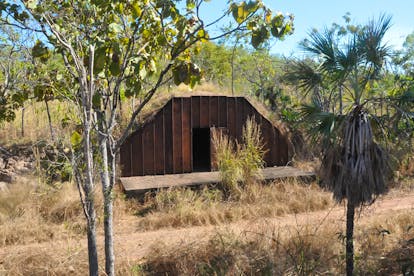
![Burrundie Explosive Magazines]()
The magazines are significant for their association with the construction of the North Australian Railway which was an important factor in the opening up of the Top End of Australia.
-
![Larrimah Museum]()
Discover the impacts of World War II and the role of the railway through displays, photographs, and interpretive text in Larimah's old railway yards.
Stay:
Larrimah accommodation


Day 13
-
![Gorrie Airfield]()
Gorrie Airfield was one of the largest and busiest military bases in the Pacific Theatre during World War II.
-
![North Australia Railway Memorial]()
The memorial comprises a plaque fixed to a boiler dedicated to civilians who worked on the railway.
Stay:
Katherine accommodation


Day 14
-
![Warloch Ponds Road Bridge]()
The site consists of a single-lane steel and concrete structure spanning Elsey Creek on an old section of the Old Stuart Highway 18km south of Mataranka near the historic Elsey Cemetery and the Elsey Homestead Memorial Cairn.
-
![Warloch Ponds Railway Bridge]()
The Warloch Ponds Railway Bridge, built 1928-29, is approximately 15km south of Mataranka and is historically significant to the Territory for its association with the North Australian Railway (NAR) which brought rail transport to the Northern Territory.
-
![Attack Creek Historical Reserve Memorial]()
The Attack Creek Memorial is situated on the Attack Creek Historical Reserve, located on the Stuart Highway 74 kilometres north of Tennant Creek.
Stay:
Tennant Creek accommodation


Day 15
-
![Tennant Creek Telegraph Station Historical Reserve]()
Visit Tennant Creek Telegraph Station, once a remote refuge and supply point for travellers and an important part of the colonial telegraph system.
-
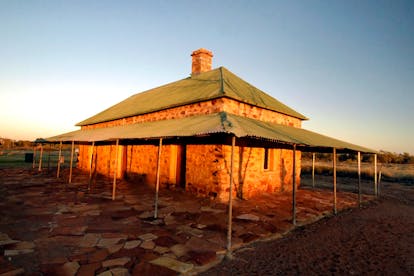
![Barrow Creek Telegraph Station Historical Reserve]()
The beautifully restored Barrow Creek Telegraph Station is located in Barrow Creek, set against the backdrop of the picturesque Forster ranges.
Stay:
Alice Springs accommodation

Day 16
-
![Anzac Hill Memorial]()
The Anzac Hill Memorial was unveiled on 25 April 1934 (Anzac Day) and was originally dedicated to all those members of the armed services who had paid the supreme sacrifice during World War I.
-
![Spencer Hill WWII Sites]()
Spencer Hill has important cultural and spiritual associations for the Arrernte people and is known to them as Tyuretye.
-
![Totem Theatre Complex, Alice Springs]()
The Totem Theatre Complex includes two WWII Sidney Williams Huts, a Wride & Abley shed and ablutions facility.
-
![Adelaide House Museum]()
Designed by Rev John Flynn (the man of the $20 note) and built-in 1926, Adelaide House was the first hospital in Alice Springs.
Stay:
Alice Springs accommodation


Finish in アリススプリングズ
Explore-
:quality(80)/f/286255898790625/95f716c9ed/2028204f2f1654b73787fb15f7eb3615.jpeg) OverviewCalculating…55 activities16 days
OverviewCalculating…55 activities16 days -
 Day 1Calculating…3 activities
 -
 Day 2Calculating…3 activities
 -
 Day 3Calculating…4 activities
 -
 Day 4Calculating…4 activities
 -
 Day 5Calculating…3 activities
 -
 Day 6Calculating…4 activities
 -
 Day 7Calculating…4 activities
 -
 Day 8Calculating…4 activities
 -
 Day 9Calculating…4 activities
 -
 Day 10Calculating…4 activities
 -
 Day 11Calculating…4 activities
 -
 Day 12Calculating…3 activities
 -
 Day 13Calculating…2 activities
 -
 Day 14Calculating…3 activities
 -
 Day 15Calculating…2 activities
 -
 Day 16Calculating…4 activities
続けて検索する
おすすめ記事
/f/286255898790625/2c7a49512c/anzac-hill.jpg)
/f/286255898790625/230e0db9c3/banner.jfif)
/f/286255898790625/3bffce91e2/uluru_sunrise_northern_territory.jpg)
/f/286255898790625/f55d1342c0/darwin_city_esplanade_sunset.jpg)